

From cellular science in Mexico to Indigenous-led land in the Canadian wild, the sanctuaries where high-performance medicine meets ancient ritual.
Something has been shifting in how people travel for their health. The passive retreat experience, the beach with yoga at seven, the juice fast with a view: these still exist, but the traveler we are talking to has moved past them. What we are seeing now is something more intentional; people are choosing destinations the way they once chose doctors or training programs. They are asking what a place can actually do for them, biologically and spiritually, and they are willing to stay long enough to find out.
This summer, the most compelling destinations are the ones that refuse to choose between the laboratory and the lineage. Here are four we are traveling to.

Costa Mujeres, Mexico The biological reset
SHA Wellness Clinic Mexico has become the serious traveler's first call when the body needs more than rest. Located in Costa Mujeres, a quiet enclave of white sand and turquoise water north of Cancún, the clinic brings the rigorous SHA Method to the Western hemisphere's most accessible luxury setting. The method was developed over decades in Alicante, Spain. The results speak for themselves.
The centerpiece for summer 2026 is the Cellular Regeneration program: a four-day medical residency built around the body at its smallest functional level. Mitochondrial function declines measurably across decades, and SHA addresses this directly with high-purity Mesenchymal Stem Cells and exosomes manufactured under pharmaceutical standards. The program begins with next-generation diagnostic work, including 3D body scanning, cognitive function mapping, and blood biomarker panels. It moves through systemic repair protocols designed to strengthen biological resilience and slow the cellular clock.
Kyushu, Japan The alchemy of earth and steam
The concept of wellness in Kyushu is not a program someone designed. It is a thousand-year conversation between a people and a volcanic landscape; the invitation this summer is to join in.
The ritual centers on onsen and shinrin-yoku: hot spring bathing and forest immersion. These are two practices that modern longevity science has spent decades catching up to. In Saga Prefecture, the Ureshino Onsen draws specifically for its alkaline waters infused with locally grown green tea. The result is an antioxidant bath that practitioners credit with skin regeneration and the kind of deep sleep that recalibrates the entire nervous system.
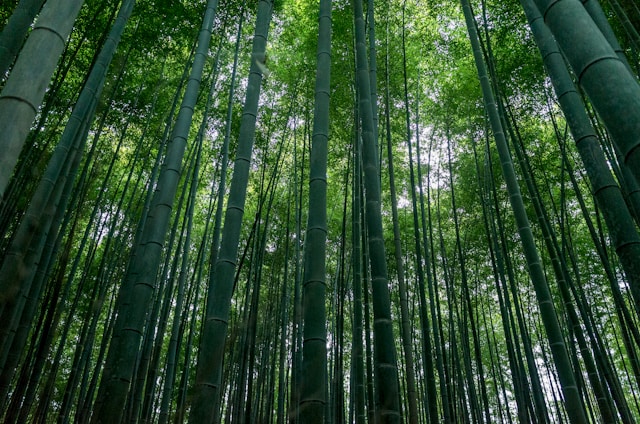
Further south, Yakushima Island holds something harder to name. The Jomon Sugi is a cedar believed to be between 2,000 and 7,200 years old, standing in a UNESCO forest that feels genuinely untouched. Being it its presence in the forest awakens a sense of scale and stability that modern anxiety cannot survive. There is no program here. The forest does the work.
Come to Kyushu to stop. That is the entire prescription.
.jpg)
Tyrol, Austria The architecture of silence
At 1,550 meters in the Austrian Alps, eriro occupies nine suites and a philosophy. Raw stone, aged wood, wool woven locally. Materials chosen not for aesthetic but for what they do to the nervous system of a person who probably spends most of their time inside surrounded by plastic and steel.
The wellness programming at eriro is what the word used to mean before it became an industry. Barefoot walks over mountain moss. Long hours in a natural rock sauna. Meals that arrive without a menu because the menu is whatever the land produced that morning. Foraged fungi. House-baked bread seasoned with salt derived from dried pine needles and vegetable peelings. Head Chef Alexander Thoss runs a zero-waste kitchen not as a selling point but as the only logical response to where the restaurant sits.
There is no spa with 47 treatments. There is the mountain. Most guests find, that after two days, the mountain is sufficient.
British Columbia, Canada The rhythm of the land
Sustutdene Eco Resort sits on the cultural historic waterfront of Takla Lake in northern British Columbia, on the ancestral lands of the Sustutdene people. It was brought to life by Niky Tevely, who saw a way to create something rare: travel that genuinely gives back more than it takes.
The experience here is built around slow travel in the truest sense. Guests stay longer. They move with the land rather than across it. Horse-guided journeys through Sustutdene territory carry stories and knowledge offered as living inheritance, not performance. Language and culture revitalization programs are woven into the economics of every stay. The resort is one of the mechanisms by which an indigenous community sustains itself and its traditions.
This is a place where the traveler's presence is genuinely useful, and the land they walk through is genuinely better for the fact that they came.
Come with time. Leave lighter, in every sense.