
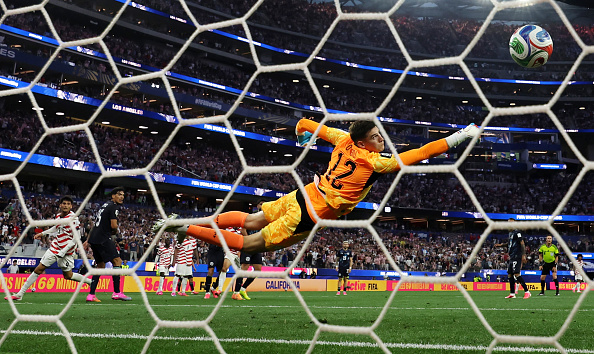
The biggest sporting event in history is heating up right in our backyard. Here is what you've missed, and how to jump in for the spectacular second half.
There is something incredibly magical about this moment. After years of anticipation, the world is finally coming together in a massive, vibrant celebration of sport, culture, and unity. The FIFA World Cup has always been more than just a tournament; it is a global festival where boundaries fade, languages merge, and millions of people share the same heartbeat—whether they are chanting in a packed stadium or high-fiving strangers at a local watch party. This summer, that electric global energy is landing right in our backyard.
The largest World Cup in history is currently unfolding just a short drive or quick flight from where you're likely reading this. We're talking about 48 teams, 3 host nations, and 104 matches sweeping across the United States, Canada, and Mexico over a jam-packed 39 days.
If you've been too busy to follow every match of the opening weeks, don't sweat it. You haven't missed your chance. The massive group stage wraps up on June 27, the highly anticipated knockout rounds kick off on June 28, and the most thrilling games are still to come.
This is a get-outside, gather-with-friends, travel-with-purpose kind of summer. Whether you are in LA, the Bay Area, or traveling to a host city, here is everything you need to know to follow the tournament.
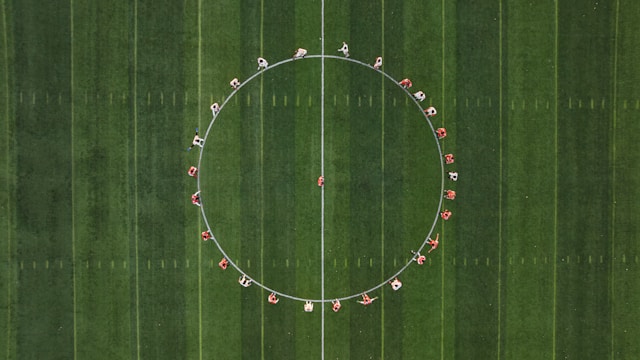
1. New Ground Rules: World Cup on a Massive Scale
The biggest change this year is the sheer size of the tournament. Expanding from 32 to 48 teams has paved the way for more nations than ever to participate, bringing diverse styles of play and passionate fanbases from every corner of the globe.
With this expansion, 48 teams, 3 host nations, and 104 matches are now spread across North America. To accommodate this massive scale, the tournament is utilizing 16 iconic host venues across three countries, ensuring that fans everywhere can experience the beautiful game live.
This expansion also introduces a brand-new Round of 32 single-elimination phase before the traditional Round of 16. For the teams, this means a grueling eight-match path to the trophy rather than seven. It's a test of ultimate endurance, squad depth, and travel logistics.
While some feared a larger tournament would dilute the quality of soccer, the opposite has been true. Goals are flying in at a relentless pace—averaging 3.18 goals per match with 89 goals scored in just the first 28 games. Offensive play has reigned supreme, but the real story is how several traditional giants have stumbled.
2. Storylines You Need to Know
Underdogs Crash the VIP Room
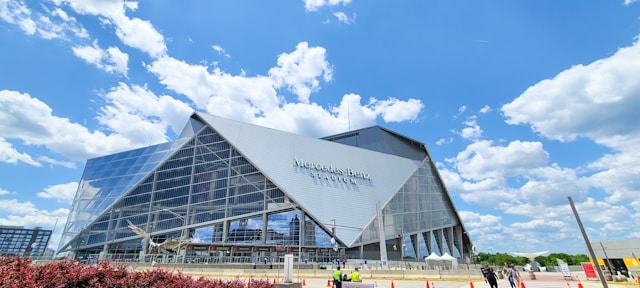
The tournament's signature shock landed at Atlanta Stadium on June 15. Cabo Verde, a tiny island nation of just over half a million people making its World Cup debut, held the reigning European champions, Spain, to a shocking 0-0 draw. Spain dominated possession and fired 27 shots, but Cabo Verde's defensive line refused to break. Two days prior, Morocco frustrated five-time champions Brazil in East Rutherford, grinding out a disciplined 1-1 draw.
However, the "fairy tale" has its limits, and the other tournament debutants learned how unforgiving this stage can be:
- Curaçao was dismantled 7-1 by a clinical German side in Houston.
- Jordan fell 3-1 to Austria in Santa Clara.
- Uzbekistan lost 3-1 to Colombia in Mexico City.
While well-drilled underdogs can frustrate world-class giants for 90 minutes, the sheer depth of elite squads still holds the upper hand over a full match.
The Legends' Divergent Paths
This summer was billed as the final World Cup stage for the two defining players of our generation: Lionel Messi and Cristiano Ronaldo. So far, their tournaments have gone in completely opposite directions.
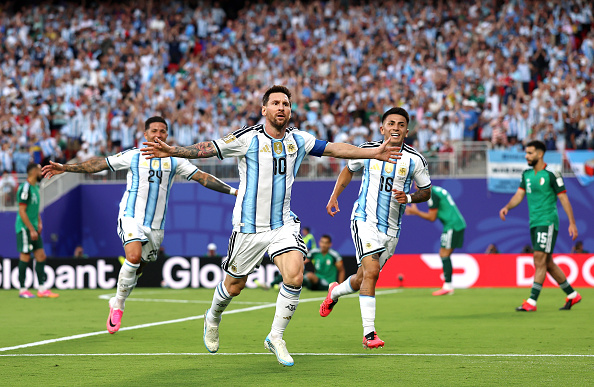
On June 16 in Kansas City, Lionel Messi put on a masterclass, scoring a historic hat-trick to lead Argentina to a 3-0 win over Algeria. At 38 years old, Messi became the oldest player in men's World Cup history to record both a brace and a hat-trick, breaking Ronaldo's 2018 record. The performance also raised his career World Cup goal tally to 16 goals, tying Germany's Miroslav Klose as the co-leading scorer in men's World Cup history.
Conversely, Cristiano Ronaldo's opening night on June 17 in Houston was a frustrating affair. Portugal was held to a 1-1 draw by DR Congo. Ronaldo, now 41, looked isolated and finished the match with zero shots on target and only 29 touches. The draw extended his scoreless drought in major international tournaments to 10 consecutive matches, and opposition fans taunted the icon with chants of "Messi" as he left the pitch.
The Golden Boot Race Heatwave
The race for the tournament's top scorer is already incredibly crowded:
- Jonathan David and Lionel Messi co-lead the pack with 3 goals each. David's goals came in a spectacular hat-trick during Canada's 6-0 win over Qatar.
- Chasing closely on 2 goals is Kylian Mbappé (who became France's all-time leading scorer with 58 international goals during a brace against Senegal).
- Also on 2 goals is Erling Haaland (who scored twice on his World Cup debut in Norway's 4-1 win over Iraq).
- England's Harry Kane rounds out the top contenders (whose brace against Croatia tied Gary Lineker's England World Cup record of 10 goals).
Home-Nation Check-In
The co-host nations are feeling the immense pride of playing on home soil, backed by deafening support from local fans:
- Mexico became the first team to book a spot in the Round of 32. Following a 2-0 opening win over South Africa, they shut down South Korea 1-0 in Guadalajara to claim a perfect 6 points from two games.
- Canada sits in a strong position in Group B with 4 points. After a 1-1 opening draw against Bosnia and Herzegovina, they unleashed a historic attacking storm in Vancouver, beating Qatar 6-0. However, the victory was dampened by a broken leg suffered by midfielder Ismaël Koné, ruling him out for the tournament.
- The United States kicked off with a confident 4-1 victory over Paraguay, powered by a Folarin Balogun brace. Captain Christian Pulisic exited at halftime with an injury and remains day-to-day. The USMNT faces a massive test against Australia in Seattle next, with first place in Group D on the line.
3. The Road to the Final: Your Logistical Blueprint
Grab your calendar. If you're planning watch parties or booking travel, here is how the back half of the tournament unfolds:
- Group Stage Ends: June 27
- Round of 32 (New Single-Elimination Phase): June 28 – July 3
- Round of 16: July 4 – July 7
- Quarterfinals: July 9 (Boston), July 10 (Los Angeles), and July 11 (Miami & Kansas City)
- Semifinals: July 14 (Dallas) and July 15 (Atlanta)
- The Final: Sunday, July 19 at MetLife Stadium (New York New Jersey Stadium) in East Rutherford, NJ
4. Host-City Spotlight: Celebrating Together
This World Cup is the ultimate excuse to get outside, move your body, and connect with fellow fans from all over the world. Whether you are walking through festive, crowded plazas or exploring local wellness scenes, you are part of a massive global community celebrating as one. Here is how to enjoy the tournament while prioritizing your wellness.
Active Match Days
If you have tickets for Los Angeles Stadium (SoFi Stadium in Inglewood), you will be part of a crowd of 70,492 fans. To accommodate the wider FIFA-standard natural grass pitch, the stadium retrofitted its seating layout. The venue features an open-sided, translucent ETFE canopy roof that blocks direct solar heat while encouraging natural ventilation, which is a massive plus during a hot North American summer.
Arrive at least 90 minutes early to explore the expansive, walkable fan zones. Skip the stress of stadium parking and opt for LA's Metro and shuttle transit service to build up a healthy step count.
Upcoming Los Angeles Fixtures:
- June 21 (12:00 PM PT): Belgium vs. Iran
- June 25 (7:00 PM PT): Türkiye vs. USA
- June 28 (12:00 PM PT): Round of 32 (Runner-up Group A vs. Runner-up Group B)
- July 2 (12:00 PM PT): Round of 32 (Winner Group H vs. Runner-up Group J)
- July 10 (12:00 PM PT): Quarterfinal
The Traveler's Wellness Blueprint
Crossing North American time zones to follow your team can take a physical toll. Keep your wellness routine sharp:
- Pre-Hydration Protocol: A recent climate report highlighted that 10 of the 16 host stadiums exceed safe playing limits due to extreme summer heat. Even under Los Angeles Stadium's shaded canopy, you need to actively hydrate with electrolyte-rich water before arriving at the match.
- Circadian Rhythm Control: Minimize jet lag across time zones by using a sleep mask and a white-noise app to ensure high-quality rest. Maybe even some Melatonin for a few nights?
- Eat Locally, Not Just in the Stadium: Skip the heavy stadium concessions. In LA, explore the vibrant organic and farm-to-table food scenes in West Hollywood and Santa Monica. In the San Francisco Bay Area, pair your match at the Bay Area Stadium with clean-eating spots nearby.
- Wellness Pairings: Turn your match trip into a nature-centric getaway. Before or after kickoff in Inglewood, head out for a scenic morning hike in the Santa Monica Mountains or a coastal walk.
What's Next?
With a completely open field, legends writing the final pages of their legacies, and the world united in celebration, this is truly a tournament like no other. We are experiencing a historical moment of shared global joy, proving that soccer has an unmatched power to bring people together.